
Updated May 2026.
Calculate real estate commission by multiplying sale price × commission rate × your split percentage. The 2026 US national average is 5.46% total commission (down from ~6% pre-NAR-settlement), typically split 50/50 between listing and buyer sides, then 60/40 to 90/10 between agent and broker. Post-NAR-settlement (effective August 2024), buyer-agent compensation can no longer be advertised on the MLS and must be negotiated separately. Use our free real estate commission calculator below to model any scenario.
This guide covers the math, the splits, the NAR settlement changes, referral fees, team splits, and how TCs should think about commission — with concrete examples for agents, sellers, and coordinators.

How is real estate commission calculated?
The core math is simple:
Commission = Sale Price × Commission Rate
If a home sells for $400,000 and the total commission rate is 5%, the total commission is $20,000. That’s it — multiply and you’re done.
But “total commission” is almost never what any single person takes home. That $20,000 gets divided between the listing side and the buying side, then split again between each agent and their brokerage. Understanding those layers is where commission calculations get real.
How is commission split between listing and buyer agents?
In a typical transaction, the total commission is divided between two sides: the listing agent’s brokerage and the buyer’s agent’s brokerage.
The most common arrangement has been a roughly even split. On a 5% total commission, each side gets 2.5%. But these percentages are fully negotiable — there’s no law or rule setting a “standard” rate. Some transactions have uneven splits where the listing side takes 3% and the buyer side gets 2%, or vice versa.
Here’s how the money flows on a $400,000 sale with a 5% total commission:
Total commission: $20,000 Listing side (2.5%): $10,000 Buyer side (2.5%): $10,000
But neither agent takes home $10,000. Each agent then splits their portion with their brokerage.
How do brokers split commission with agents?
After the commission is divided between sides, each agent splits their portion with their brokerage. Common split structures include:
70/30 split — the agent keeps 70%, the brokerage takes 30%. On a $10,000 agent-side commission, the agent takes home $7,000 and the brokerage keeps $3,000.
80/20 split — common for experienced agents with higher production. The agent keeps $8,000, brokerage gets $2,000.
90/10 or 100% models — some brokerages (like eXp Realty or Real) offer near-100% splits in exchange for flat monthly fees, transaction fees, or cap structures.
Graduated/tiered splits — the split percentage changes as the agent hits volume milestones. An agent might earn 70% on their first $15,000 in commission for a quarter, then 85% on everything above that. This rewards production and motivates agents to push for more deals.
Here’s a worked example using a 70/30 split:
Sale price: $400,000 Total commission (5%): $20,000 Listing side (2.5%): $10,000 Agent split (70%): $7,000 Brokerage split (30%): $3,000
That $7,000 is the agent’s gross — before any transaction fees, E&O insurance, marketing costs, or taxes come off the top.
Calculate your exact split with our free commission calculator →
What Changed After the NAR Settlement
The 2024 NAR settlement fundamentally changed how buyer agent commissions work. Here’s what matters for calculating commission in 2026:
Before August 2024: Sellers listed their property on the MLS with a pre-set buyer agent commission (typically 2.5–3%). The seller paid both their own agent and the buyer’s agent out of the sale proceeds. The buyer rarely thought about commission at all.
After August 2024: Buyer agent compensation can no longer be listed on the MLS. Buyers must sign a written agreement with their agent specifying exactly what the agent will be paid — before touring any homes. The commission is now a separate, negotiated fee.
What this means for commission calculations: The total commission is no longer a single number negotiated between the seller and their listing agent. Instead, you may need to calculate two separate commissions — one for the listing side and one for the buyer side — because they’re now negotiated independently.
In practice, most sellers are still paying buyer agent commissions to attract buyers, especially in the current market. Commission rates have actually ticked up slightly since the settlement, averaging 2.43% for buyer agents nationally. But the key difference is transparency: everyone now knows upfront what each party is paying.
Referral Fees
Referral fees add another layer to the calculation. When an agent refers a client to another agent — often because the client is buying or selling in a different market — the referring agent typically receives 20–35% of the receiving agent’s commission.
Example with a 25% referral fee:
Sale price: $400,000 Buyer agent commission (2.5%): $10,000 Referral fee (25%): $2,500 (paid to referring agent) Receiving agent keeps: $7,500 Agent-brokerage split (80/20): Agent gets $6,000, brokerage gets $1,500
Referral fees come off the top before the agent-brokerage split in most arrangements. This is important — missing a referral fee in your calculation means overstating the agent’s take-home by thousands of dollars.
Team Splits
Agents who work on teams have an additional split layer. The typical flow is:
- Total commission is divided between listing and buyer sides
- Each side’s commission is split between the agent’s brokerage and the team
- The team’s portion is then split between the team lead and the individual agent
For example, a team might have a 50/50 internal split where the team lead and agent each get half of the team’s commission. On that same $400,000 sale:
Buyer side commission (2.5%): $10,000 Brokerage split (20%): $2,000 Team share (80%): $8,000 Team lead (50%): $4,000 Agent (50%): $4,000
That’s a big difference from the $7,000 the same agent would earn working independently on an 70/30 split. Team structures trade per-deal income for higher volume — the agent closes more deals because the team generates leads, but each deal pays less.
How TCs Should Think About Commission
If you’re a transaction coordinator, you’re tracking commission for a different reason: you need to know the numbers to prepare accurate closing documents, verify commission disbursement authorizations, and sometimes calculate your own per-transaction fee.
A few things TCs run into regularly:
Dual agency transactions reduce the number of parties splitting the commission, but the total rate is often lower. Make sure you know whether the brokerage is keeping both sides or adjusting the rate.
Commission disputes at closing happen when the split or referral fee wasn’t clearly documented. As a TC, your job is to verify the commission disbursement authorization matches the listing agreement, buyer representation agreement, and any referral agreements — before closing day.
Commission-based TC pricing is becoming more common. Some TCs charge a flat fee per transaction, while others charge a percentage of the commission. If you’re pricing your services, our TC rate calculator can help you benchmark against the market.
State-by-State Variations
Commission rates aren’t uniform across the country. Market conditions, cost of living, and local customs all affect what’s typical:
Higher-value markets like New York, San Francisco, and Los Angeles tend to see lower commission percentages (4–5% total) because the dollar amounts are still substantial on expensive properties.
Markets with lower median home prices tend to have higher commission percentages (5–6%) because agents need a higher rate to make the per-deal economics work.
Some states have additional regulations around commission disclosure, rebates, or how commissions can be structured. Nine states currently prohibit commission rebates from agents to consumers.
For state-specific closing requirements that affect commission disbursement, see our state-by-state disclosure requirements guide.
Common Commission Calculation Mistakes
Forgetting to account for fees. The agent’s gross commission isn’t their take-home. Transaction fees ($300–$500), E&O insurance, desk fees, technology fees, and marketing costs all come out before the agent sees a dollar. A 3% commission on a $300,000 sale looks like $9,000 but might net the agent $5,500 after all deductions.
Assuming a 50/50 split between sides. The listing side and buyer side don’t always split evenly. Verify the actual split in the listing agreement and buyer representation agreement — don’t assume.
Using outdated commission rates. The “standard 6%” hasn’t been standard for years. National averages are closer to 5–5.5% total, and many markets are lower. Always use the actual negotiated rate, not a rule of thumb.
Not tracking the NAR settlement requirements. Since August 2024, buyer agent compensation must be documented in a written agreement before home tours begin. If you’re a TC or brokerage administrator, make sure these agreements are in the file before the first showing, not cobbled together at closing.
Calculate Your Commission
Stop doing commission math on scratch paper. Use our free real estate commission calculator to calculate:
- Total commission from any sale price and rate
- Listing agent vs. buyer agent splits
- Agent-brokerage splits (70/30, 80/20, or custom)
- Net agent earnings after fees
- Tiered commission structures
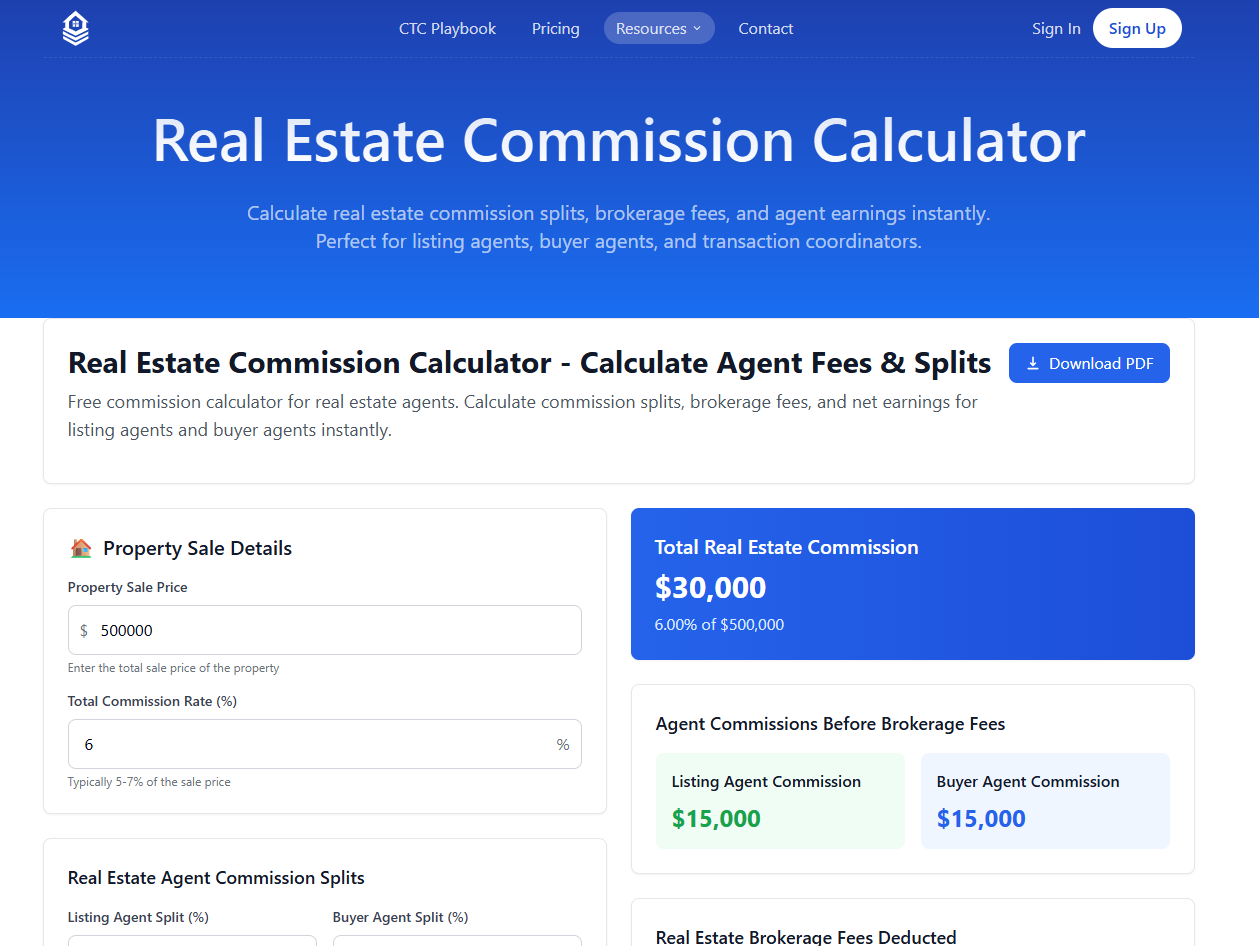
Try the calculator now — it’s free, no signup required →
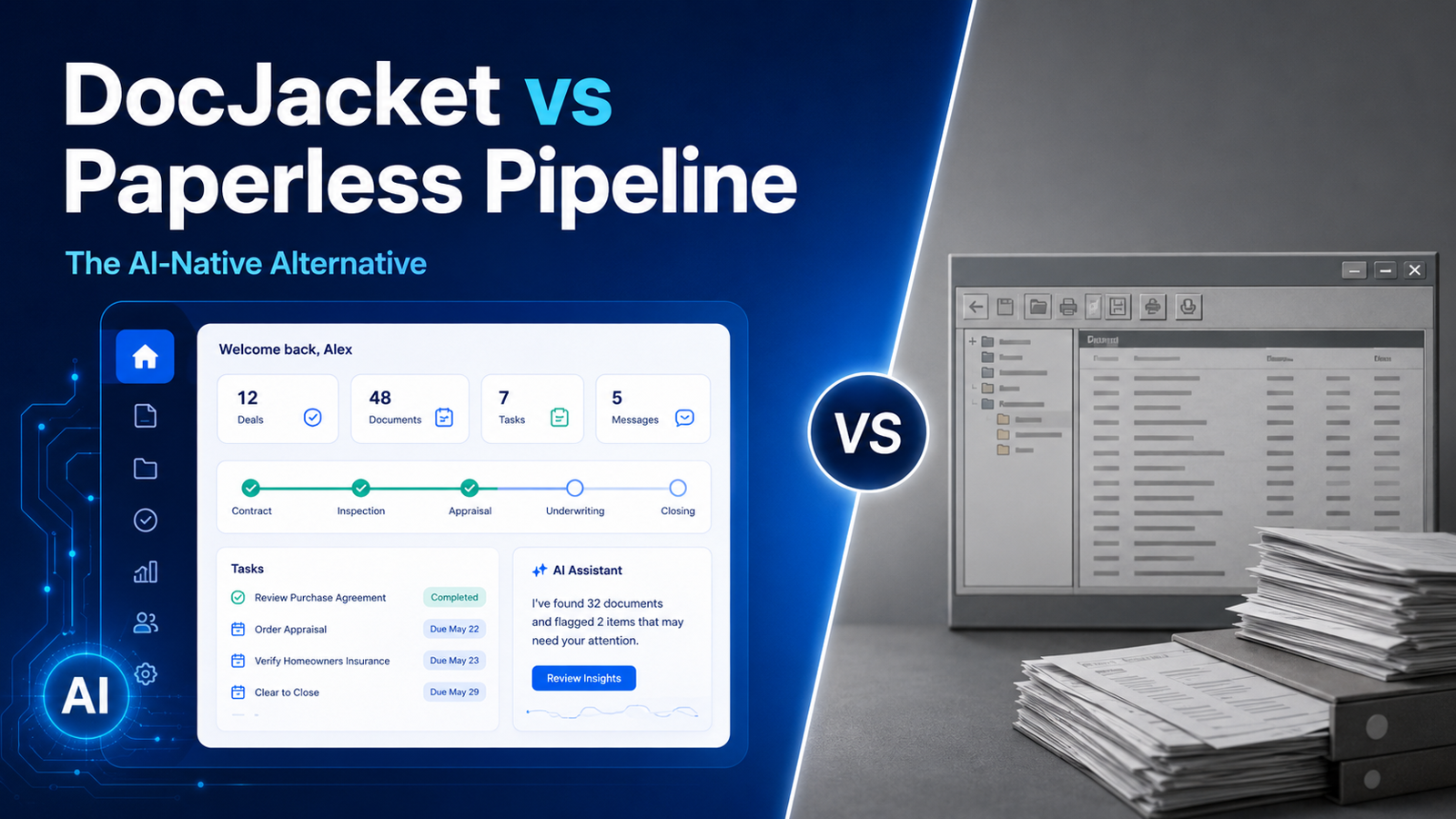
If you’re a transaction coordinator managing commission tracking across multiple transactions, DocJacket automates the data extraction and timeline building so you can focus on coordination instead of spreadsheets.